
Planning a trip should feel exciting, not overwhelming. You’re probably here because you want practical, up-to-date travel insights that actually help. This guide covers emerging travel trends, destination highlights, hotel booking hacks, and essentials like travel document organization. The things that matter when you’re on the road. It walks you through booking smarter, packing better, and dodging the common mistakes most travelers make, the ones that’ll cost you time and money if you’re not careful.
Travel information online can be outdated or overly generic. That’s why we’ve built this article around current industry trends, firsthand destination research, and booking strategies that frequent travelers actually use. No fluff. You’ll find advice that works because it comes from people who book flights constantly, track pricing patterns, negotiate with hotels, and know which travel sites are worth your time and which ones aren’t.
Planning a weekend escape or a months-long trek across continents? You’ll find actual ways to cut costs without sacrificing comfort, stay organized so nothing falls through the cracks, and genuinely enjoy yourself instead of white-knuckling through the whole thing.
From chaos to calm
If you’ve ever torn apart your suitcase searching for a passport, you know the pre-trip scramble is real. Confirmations vanish. Boarding passes hide. You’re convinced something important is missing, even though you packed it five minutes ago.
Here’s the thing: you’re not really struggling with what to pack. You’re drowning in paperwork. This guide breaks travel document organization into four straightforward steps you can use every time: gather everything, verify the details, store it safely, and back it up. Verification isn’t complicated. Check dates and names twice, catch typos before they wreck your airport experience. Backing up matters more than you’d think; get secure digital copies into the cloud so you’re not betting everything on a single piece of paper (or one digital file). That’s the real safety net.
As a result, you travel confidently, no Home Alone airport scenes, because everything sits exactly where it belongs. Every step stays simple. Always.
The dual-hub system: building your digital and physical document fortress
A few years back, I’m standing in an airport security line with a dead phone and this awful sinking feeling. My boarding pass. Hotel confirmation. Everything, trapped behind a black screen. That’s when I committed to keeping two systems running: digital and physical, like a backup plan for my backup plan. One fails, the other’s still standing. Lost wallet? Dead battery? No Wi-Fi? Doesn’t matter. You’ve got your fortress walls built twice.
The digital vault
Start by creating a dedicated, secure cloud folder using Google Drive, Dropbox, or iCloud. A cloud folder is simply online storage you can access from any device after logging in. Inside, upload clear scans or photos of your passport photo page, visas, driver’s license, travel insurance card, and credit cards (front and back).
Why both sides of your credit card? Because international numbers for reporting fraud are often on the back, and fraud spikes during travel according to the FTC. That’s the practical reason, when you’re overseas and your card gets compromised, you can’t exactly wait until you’re home to call a domestic number. The back of the card’s got what you need. It’s a small detail that saves you from a lot of headache (and potentially thousands of dollars) when things go wrong abroad.
Before you head out, flip on “offline access” in your cloud app settings. You’ll be able to open files without needing internet. That’s huge if you’re stuck in an airport or somewhere remote with spotty connection, where you’d normally be locked out of your own work.
The physical folio
Next, grab a slim travel document organizer or multi-pocket folder. Set it up like this: passport and boarding pass in one section (makes airport checkpoints faster). Hotel confirmations and rental car details go in another. Five minutes. When you land, you’re not hunting through your bag at the rental counter or hotel desk, everything’s right there. It actually works.
This simple system transforms travel document organization from chaos to calm. It may feel old-school (Jason Bourne would approve), but when plans shift, as they often do, you’ll be ready. And that confidence? It’s worth the extra prep.
The ultimate checklist: every document you need, categorized
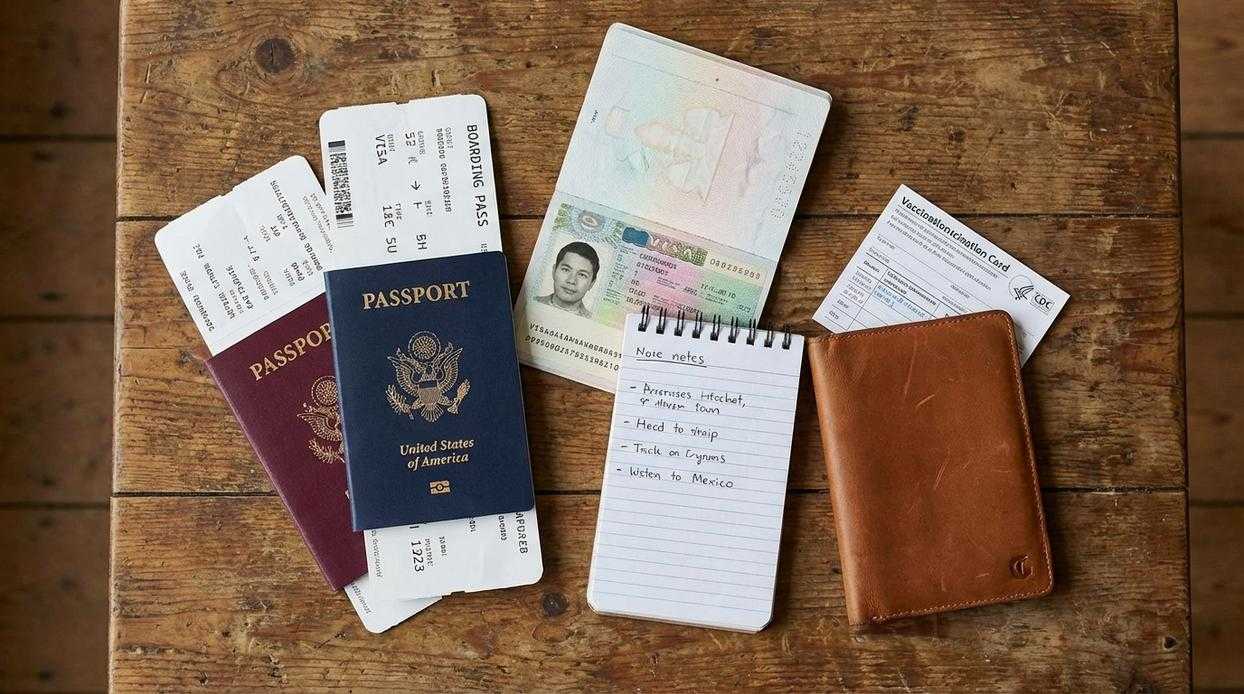
Think of this as your pre-trip paper trail audit. Forgetting even one item can derail a trip faster than a delayed connection, and yes, it happens to the best of us. Here’s what I recommend you gather and print, then store it all properly.
Category 1: Identification & Legal (The “Can’t Leave Home Without” List)
- Passport and/or National ID Card
- Necessary Visas for all destination and layover countries
- Driver’s License / International Driving Permit
- Physical copies of passport and visa pages (stored separately from the originals)
Keep your originals in a waterproof document holder and stash copies somewhere else, a different bag, ideally. Your passport vanishes? You’ll be grateful you did this. A friend lost hers in Barcelona, and having copies cut weeks off the embassy replacement process.
A visa is official permission to enter a country for a specific purpose and timeframe. Always check entry requirements through official government sources before booking.
Category 2: Transportation & Accommodation (The “How You Get There & Stay There” List)
- Flight, train, or bus tickets/confirmations (digital and one printed copy)
- Hotel, airbnb, or hostel booking confirmations
- Rental car reservation details
- Airport transfer instructions and contact numbers
Airlines may accept mobile boarding passes, but border agents sometimes request printed proof of onward travel. Print one copy. Old school? Maybe. Smart? Absolutely.
Category 3: Health & Finance (The “Just In Case” List)
- Travel insurance policy details and emergency contact number
- Proof of vaccination (if required)
- Copies of important medical prescriptions
- Emergency contact list (family, banks, embassy)
Travel insurance covers unexpected medical or trip disruptions (CDC and U.S. State Department both recommend it for international travel). Review your policy before departure.
For deeper guidance, review health and safety essentials every traveler needs.
Pro tip: Use a simple folder system for effective travel document organization, one section per category. It keeps stress low and check-ins smooth.
Next-level organization: pro hacks for a smoother journey
I missed a train in Rome. Stood there on the platform, phone in hand, scrolling through emails for my hotel confirmation while the 2:15 to Florence pulled away. That scramble, that panicked ten-minute search through my inbox for a single address, taught me something. You need a Master Sheet. Not some elaborate travel binder. Not a dozen browser tabs. One document. Digital and printed. Flight numbers, hotel addresses, phone numbers, confirmation codes, key tour times. Your trip’s command center, basically. James Bond would approve. Instead of endless scrolling through your phone like you’ve lost your mind, you glance once and move. Everything’s there. The sheet goes in your pocket, lives on your phone, sits on your hotel nightstand. Most people don’t bother. They’ll tell you it’s overkill, that their phone’s got it all sorted. But once you’ve lived through missing a connection because you were hunting for information you should’ve had in one place, you don’t travel without it again. Ever.
Next, put your smartphone wallet to work. Toss your boarding passes, hotel reservation cards, and event tickets into Apple Wallet or Google Wallet, they’re scannable and instant. Apple Support notes that wallet updates passes in real time when details change, which honestly saved me during a gate switch in Chicago. One tap. That’s it. Why waste time fumbling at the counter when everything you need is right there?
Meanwhile, try the email forwarding trick, apps like TripIt let you forward confirmation emails to automatically build a master timeline. It feels like magic, but it’s really just smart automation at work. Create a dedicated folder so backups live in one searchable spot. Done.
Finally, color-code your physical documents. Use blue paperclips for flights, green for hotels, yellow for activities. It sounds simple, but this visual system actually works, researchers have found that reducing cognitive load speeds up decision-making. Smart travel document organization transforms chaos into something manageable. Your journey flows smoothly from check-in to checkout. When everything’s in order, you arrive earlier, breathe easier, and might actually enjoy that airport coffee instead of panicking at departure boards.
The pre-travel scramble is real, lost confirmations, last-minute printing, that nagging “did I forget something?” A dual-hub setup crushes it. One secure digital vault plus one reliable physical folio creates smart travel document organization that builds redundancy, clarity, and peace of mind. Phone dies? You’ve got paper backups. Papers vanish? Cloud saves the day. Problem solved.
That means smoother check-ins, faster security lines, and way more energy for the fun stuff. Start your vault tonight. Pick a folio before your next trip.
Ready for smoother travels ahead
You came here looking for smarter ways to simplify your trips. Now you’ve got them. Booking strategies, timing tips, the insider moves that dodge the common travel headaches most people hit, it’s all here. Your next trip won’t feel like a slog through the usual chaos anymore.
Travel stress doesn’t wait for the airport. It starts at home: lost confirmations, a missing passport, the 2 a.m. Email panic. Strong Travel document organization stops that spiral before it starts. When your plans, IDs, and reservations are actually accessible instead of buried in twelve tabs and three email accounts, something shifts. You don’t travel anxious. You just travel.
Time to make it happen. Get your documents in order, lock down those bookings, and think through what you’re actually doing. Want actual travel tips? Our guides cover destination intel, booking strategies, and the hacks that thousands of travelers swear by, the stuff that actually saves time and money when you’re out there. Start planning smarter today. Your next trip doesn’t have to fall apart.
 Richard Guarinolios adds depth and value to T Tweak Hotel through travel-focused content designed to inform, inspire, and simplify the planning experience. His work explores destination guides, traveler advice, and booking insights that help readers make better decisions before and during their trips. With a style that balances clarity, usefulness, and discovery, Richard helps shape T Tweak Hotel into a trusted source for modern travelers looking for practical and enjoyable travel experiences.